From Chaos to Efficiency
Why Customer Flow Defines Modern Service
- Team cleverQ
- May 07, 2026
- 5 min read
For many organizations, the problem is no longer the waiting line itself. The real challenge is operational chaos.
Employees are constantly interrupted. Customers feel uncertain about wait times. Walk-ins and appointments compete for attention. Service areas become crowded, stressful, and difficult to manage. And despite major investments in digital transformation, many customer-facing operations still rely on disconnected and manual processes.
This affects more than efficiency. It affects customer satisfaction, employee experience, security, and ultimately the perception of the entire organization.

Customer Expectations Have Changed
Today’s customers expect transparency everywhere.
- They track food deliveries in real time.
- They receive updates before boarding a flight.
- They know exactly when their rideshare driver will arrive.
But in many service environments—banks, healthcare facilities, government offices, retail stores, or logistics operations—customers still enter without visibility, communication, or predictability. Waiting without information has become one of the biggest friction points in modern customer experience.
The issue is not simply waiting. The issue is uncertainty.
Efficiency Is More Than Speed
Modern service organizations are beginning to understand that efficiency is not about serving people faster at all costs.
True efficiency comes from orchestration. It means managing the entire customer journey: before arrival, during check-in, throughout the waiting experience, during the service interaction and even after the visit
When customer flow becomes connected, organizations gain visibility and control over operations in real time. Employees can focus on serving instead of managing interruptions. Customers receive clarity and guidance. Managers gain operational insights that help optimize staffing and service quality. The result is not only faster service. It is calmer, more predictable, and more human service.
From Queue Management to Intelligent Service Infrastructure
For years, queue management was viewed as a simple ticketing system. Today, customer flow is evolving into intelligent service infrastructure. Modern environments combine online appointment booking, walk-in orchestration, mobile ticketing, kiosk check-in, digital signage, real-time notifications, analytics and operational reporting, identity-aware customer journeys
This is where solutions like cleverQ Qwantum introduce a completely new layer of operational intelligence.
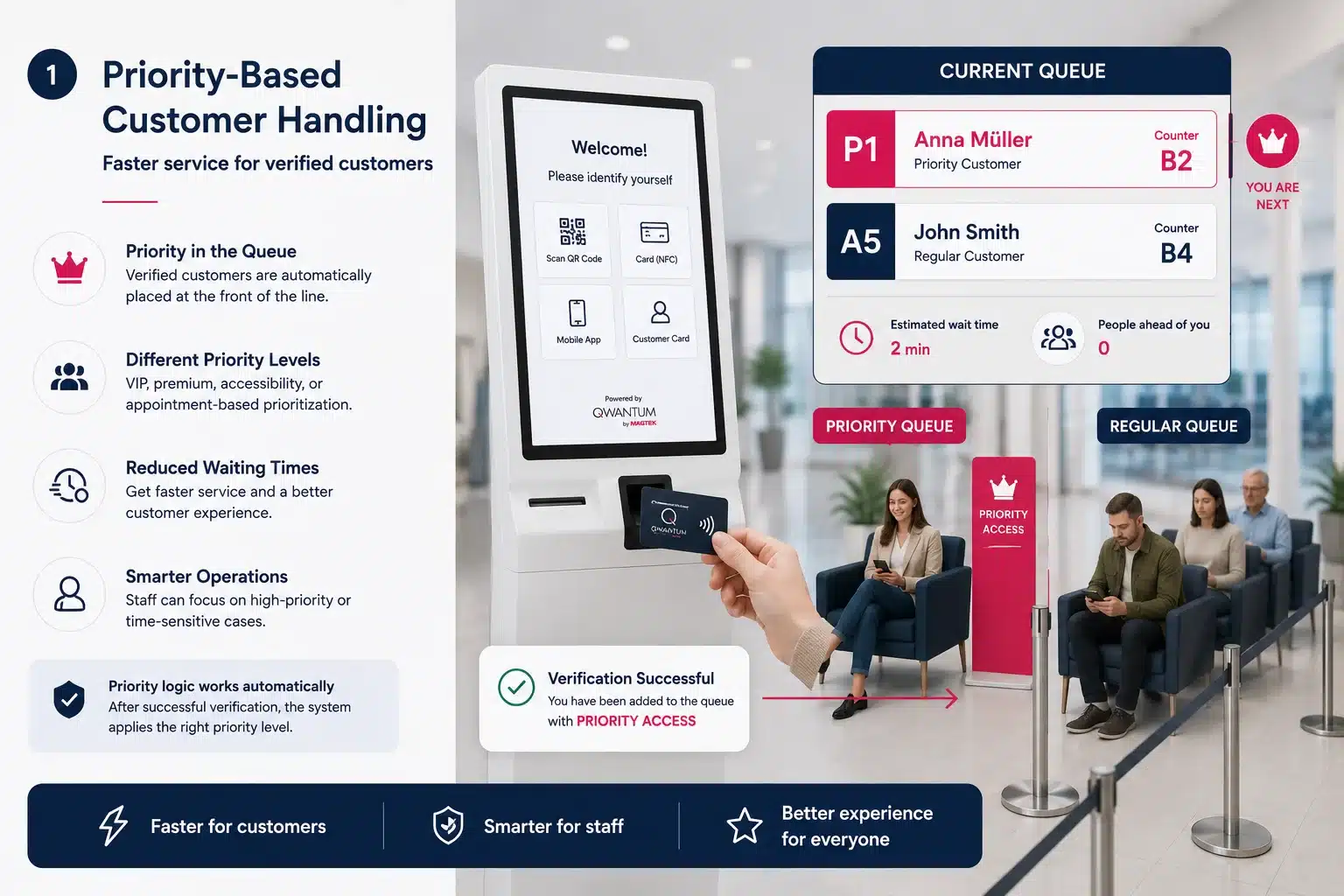
Priority-Based Customer Handling
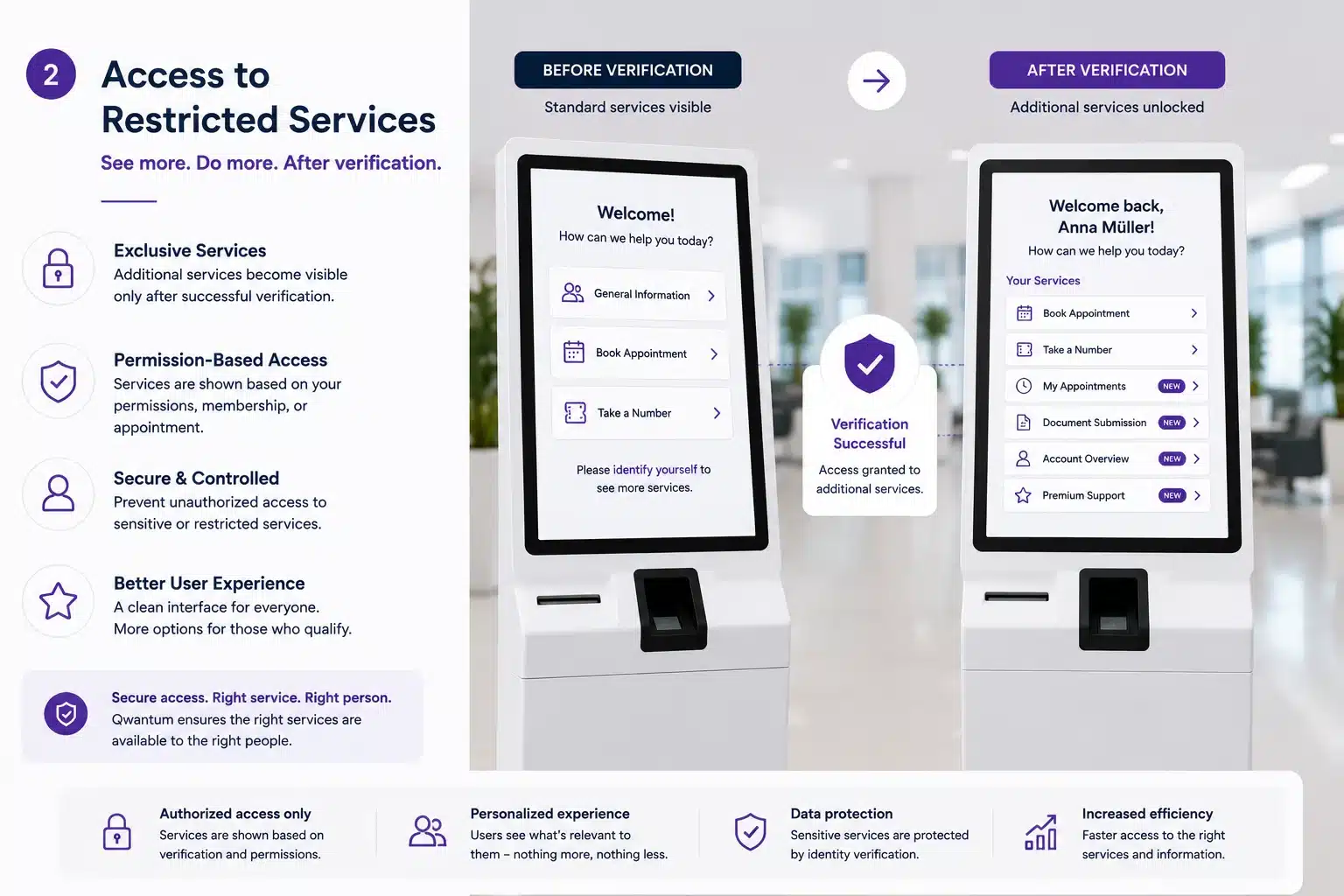
Additional Services after Verification
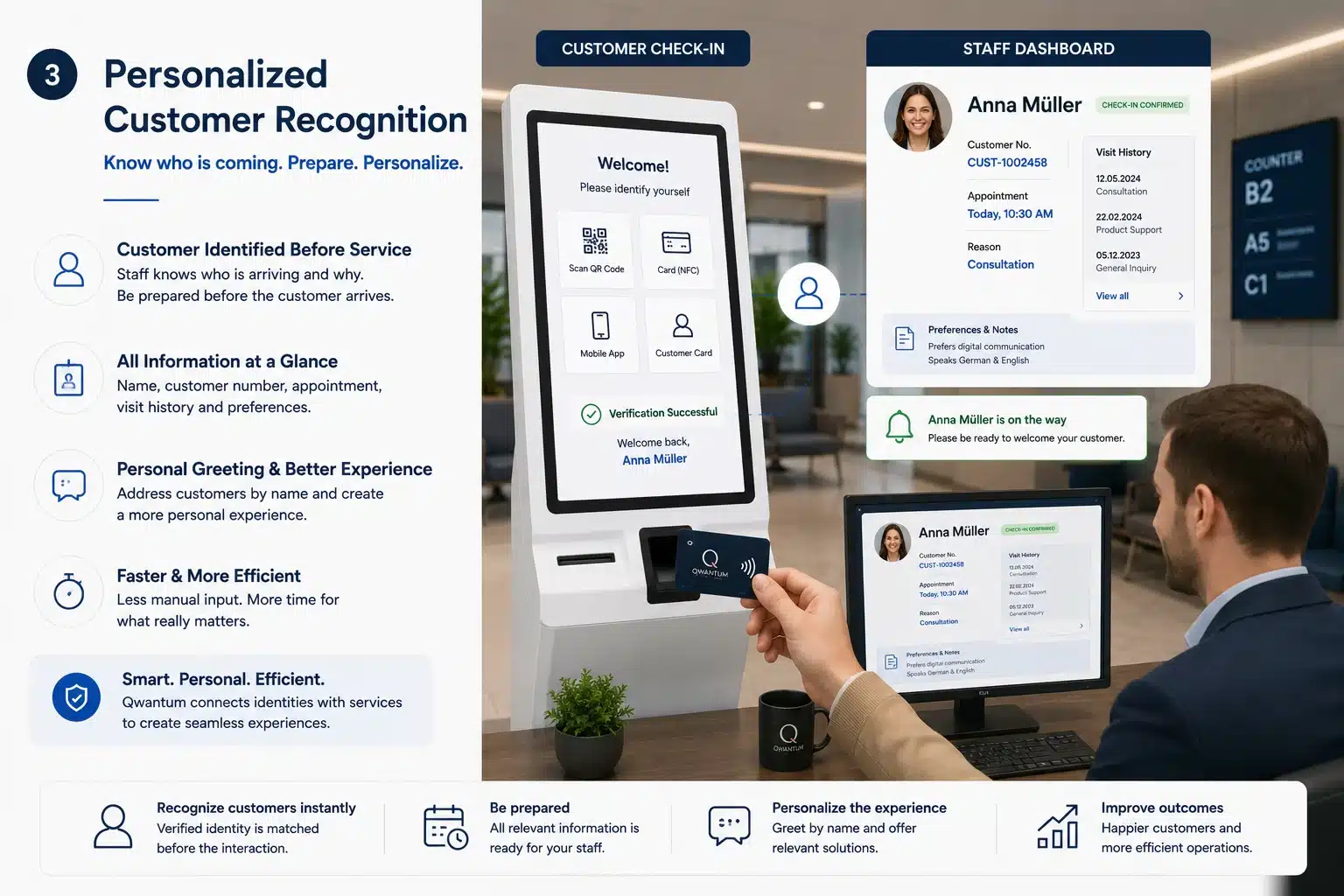
Personalized Customer Recognition
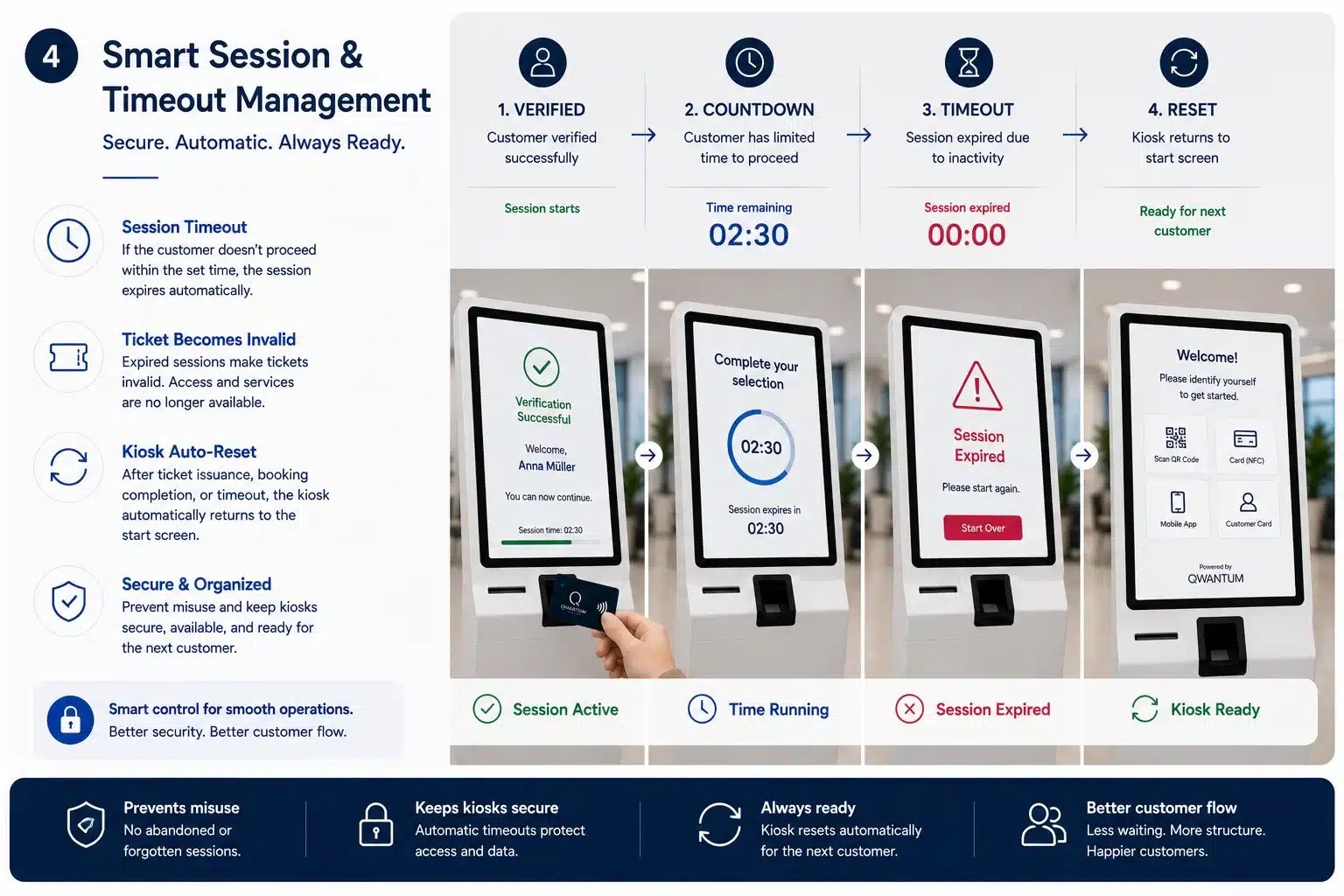
Smart Session Timeout Management
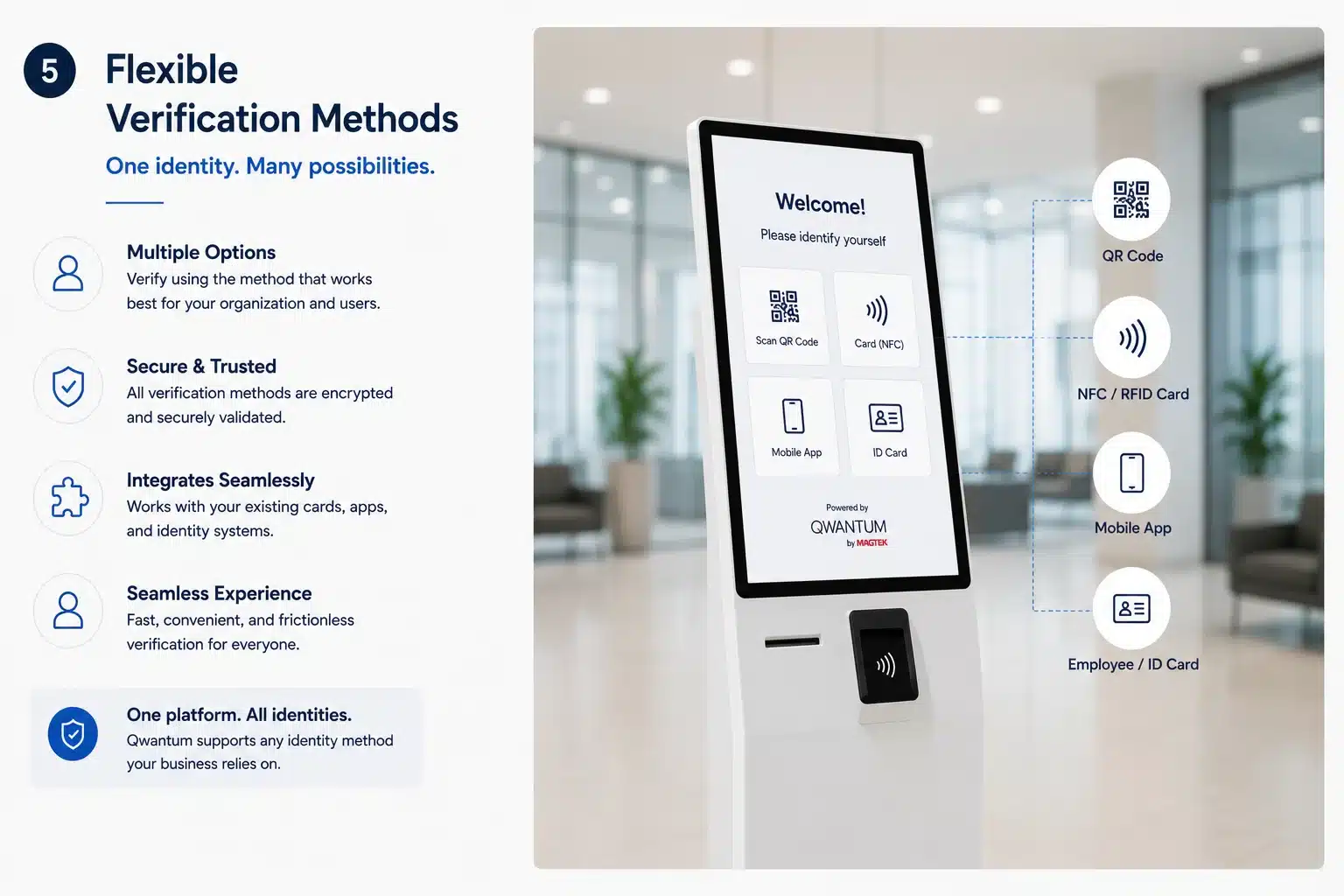
Flexible Verification Methods
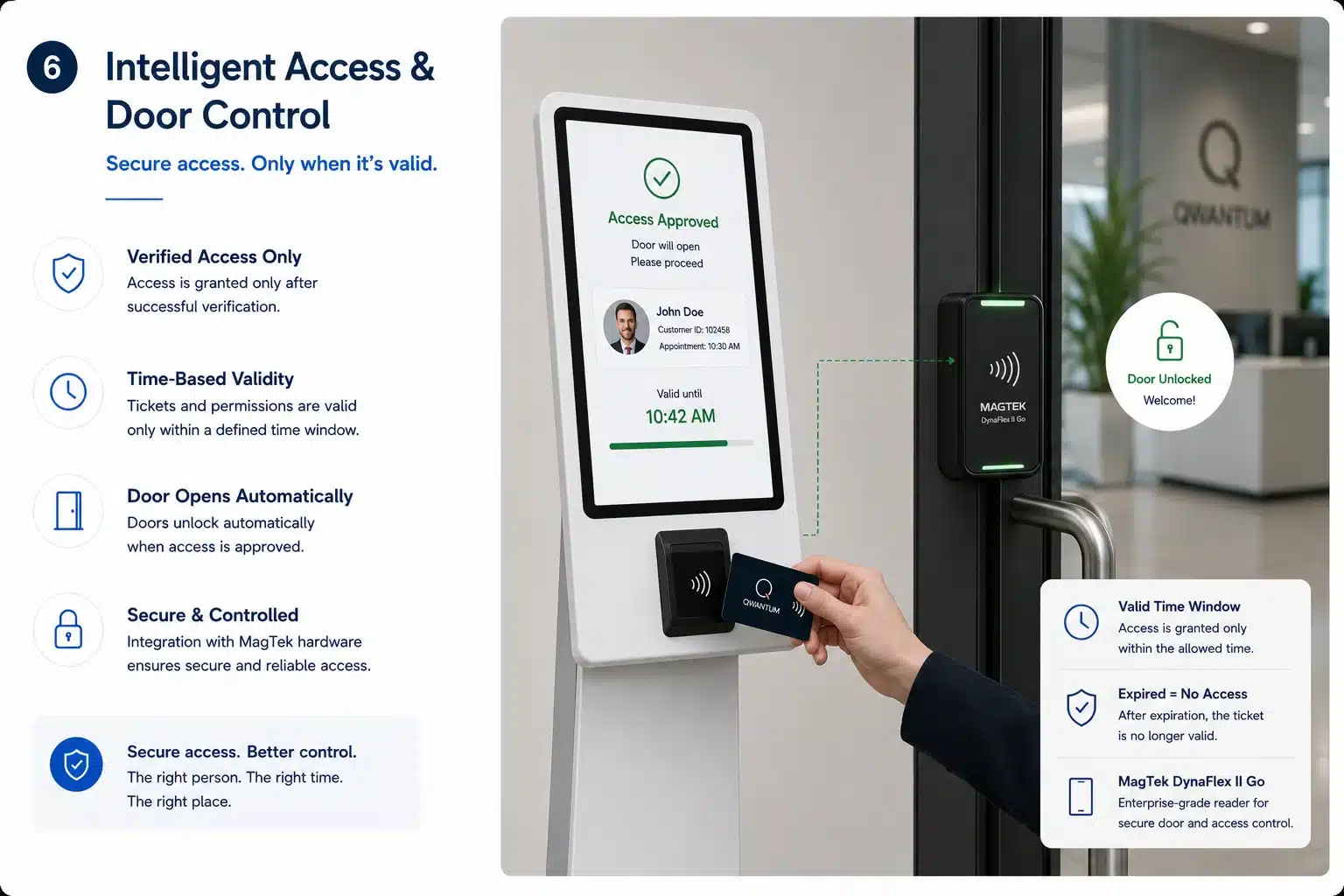
Intelligent Access & Door Control
Industry Use Cases
Government & Public Services
- Verified citizen check-in
- Access control for restricted departments
- Personalized public services
- Priority handling for appointments or accessibility needs
- Smart routing across multiple service areas
- Secure access to government facilities and waiting zones
- Reduced manual verification effort
- Faster and more structured citizen flow
Healthcare & Clinics
- Verified patient check-in
- Access control for treatment and restricted areas
- Patient identification before service
- Insurance and appointment validation
- Personalized patient workflows
- Intelligent routing to departments and treatment zones
- Reduced administrative workload
- Faster and safer patient journeys
Retail, Returns & Repair Services
- Verified returns and repair check-in
- Product and warranty validation
- Access to premium or restricted services
- Personalized customer recognition
- Priority handling for premium customers
- Faster service processing
- Structured repair and pickup workflows
- Reduced fraud and unauthorized claims
Logistics & Distribution Centers
- Verified driver and visitor check-in
- Access control for warehouses and loading zones
- Time-based access permissions
- Dock and loading bay routing
- Driver identification before entry
- Automated visitor and contractor management
- Intelligent routing across logistics facilities
- Reduced unauthorized access and operational interruptions
Banking
- Verified customer check-in before service access
- Secure multi-factor identification at self-service kiosks
- Access control through identity verification
- Automatic ticket assignment based on customer profile
- Priority routing for premium and business customers
- Real-time queue and appointment management
- Smartphone notifications and digital ticketing
- Reduced fraud risks and improved branch efficiency
The Human Side of Efficiency
Technology alone does not solve operational chaos. The goal is not to replace human interaction. The goal is to improve it. When employees are supported by clear workflows, identity-aware processes, and real-time visibility, they can focus on what matters most: delivering better service experiences.
When customers know where to go, how long they will wait, and what happens next, frustration decreases dramatically.
Structure creates confidence. And confidence improves the overall experience for everyone involved.

The Next Decade Will Be Defined by Intelligent Customer Flow
The organizations leading the future of customer experience will not simply digitize waiting lines. They will build intelligent service environments. Because customer flow is no longer just an operational topic. It is becoming critical infrastructure for modern service organizations. The journey from chaos to efficiency starts with visibility, orchestration, security, and connected customer experiences. And the organizations that recognize this early will define the next generation of service.
The Next Decade Will Be Defined by Intelligent Customer Flow
The organizations leading the future of customer experience will not simply digitize waiting lines. They will build intelligent service environments. Because customer flow is no longer just an operational topic. It is becoming critical infrastructure for modern service organizations. The journey from chaos to efficiency starts with visibility, orchestration, security, and connected customer experiences. And the organizations that recognize this early will define the next generation of service.
If you’re exploring smarter, more connected service environments, we’d love to exchange ideas and show you what’s possible with intelligent customer flow management.
- Mail: info@cleverq.us
- Phone: 786-709-9550
- 851 Ne 1st Ave Miami, FL 33132-1842 (Paramount Miami World Center)